Introduction to Ayurveda | Meaning, History, Principles and Objective
Introduction to Ayurveda – Meaning, History, Definition, Principles and Objectives
Introduction to Ayurveda
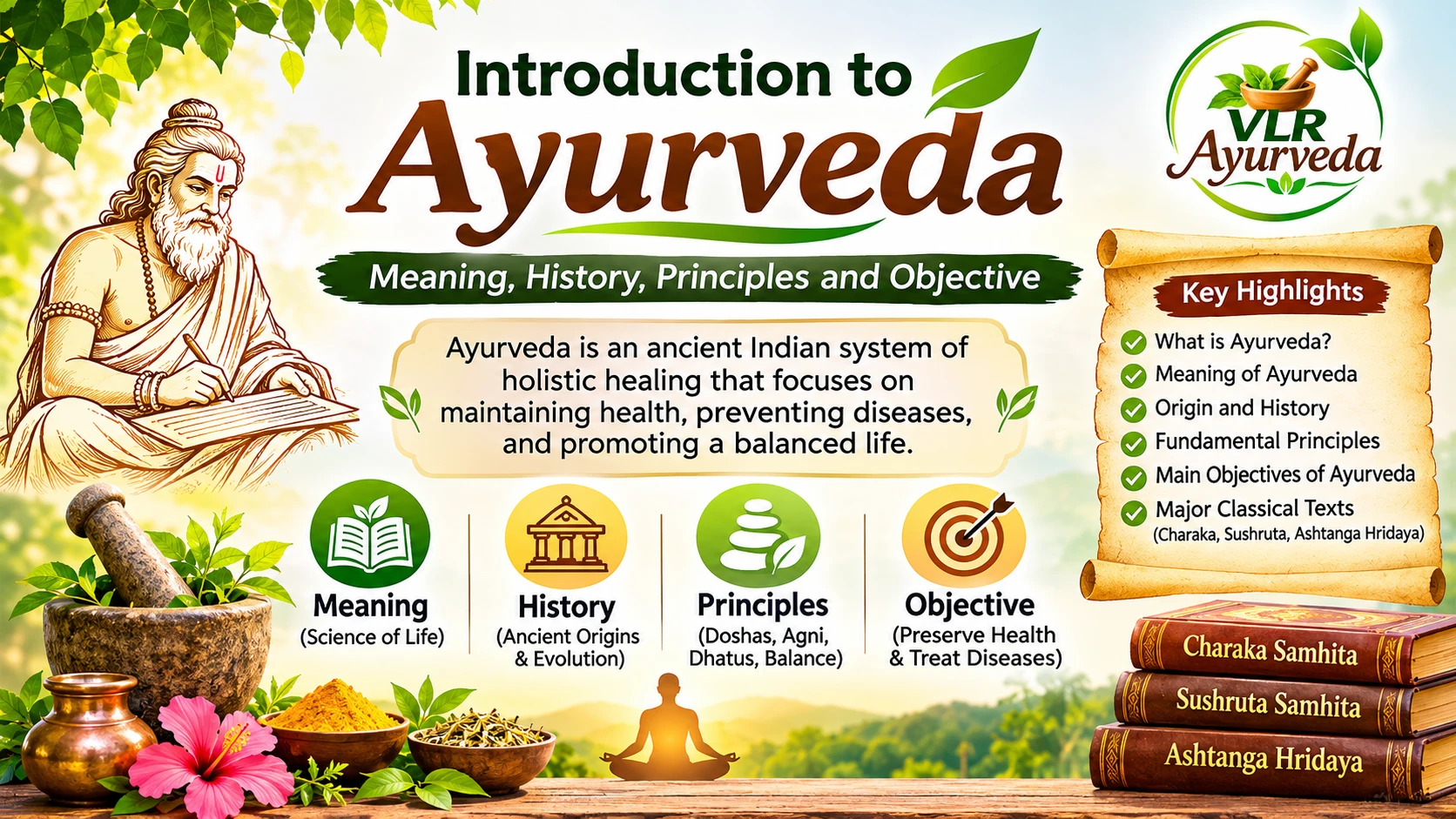
Ayurveda is one of the oldest traditional systems of medicine originating in the Indian subcontinent. It is a comprehensive system of healthcare that focuses on maintaining health, preventing diseases, and managing illnesses through an integrated approach to the body, mind, and consciousness.
Ayurveda is not limited to the treatment of diseases. It also provides guidelines for maintaining a healthy lifestyle through proper nutrition, daily routines, seasonal practices, mental well-being, and natural healthcare approaches.
The word Ayurveda is derived from two Sanskrit words:
- Ayur (आयुः): Meaning life or longevity.
- Veda (वेद): Meaning knowledge or science.
Therefore, Ayurveda literally means The Science of Life.
Ayurveda is frequently described as a tradition that is more than 5,000 years old. However, its precise historical beginning cannot be established through a single date. Its knowledge developed over centuries through traditional teachings and classical medical literature.
The fundamental principles of Ayurveda continue to influence traditional approaches to healthcare, nutrition, lifestyle, and preventive health practices.
At VLR Ayurveda, understanding these fundamental concepts provides a foundation for learning the traditional principles of health and wellness.
1. Meaning and Definition of Ayurveda
Ayurveda is a traditional system of knowledge that explains the nature of life, the factors responsible for health and disease, and the methods used to maintain physical and mental well-being.
It provides knowledge about:
- Healthy and unhealthy ways of living.
- Factors that support or negatively affect life.
- Physical and mental health.
- Food and dietary practices.
- Daily and seasonal routines.
- Disease prevention and management.
- Medicinal plants and traditional formulations.
- Maintaining harmony between the body, mind, and consciousness.
According to Ayurveda, a healthy lifestyle involves understanding the individual body constitution and making suitable decisions regarding food, activities, rest, and other lifestyle practices.
1.1 Traditional Origin of Ayurveda
According to traditional Ayurvedic literature, the knowledge of Ayurveda is believed to have originated from Lord Brahma.
The traditional knowledge transmission is described through the following lineage:
Lord BrahmaTraditional source of Ayurvedic knowledge
Prajapati
Ashwini Kumaras
Lord Indra
Sages and Ayurvedic Scholars
Simplified traditional knowledge transmission lineage described in classical Ayurvedic literature.
The Charaka Samhita describes the transmission of Ayurveda from Brahma through Prajapati, the Ashwini Kumaras and Indra, followed by the teachings transmitted to sages such as Bharadvaja and Atreya. Vedic Samhita+1
1.2 Who is Lord Dhanvantari?
Dhanvantri Mantras for Healing – Powerful Chants to Cure Diseases Naturally
Lord Dhanvantari is traditionally worshipped as the divine physician and the God of Ayurveda and medicine in Hindu tradition.
According to the traditional Ayurvedic lineage associated with surgery:
- Lord Dhanvantari is regarded as an important source of surgical knowledge.
- He is associated with the teachings transmitted to Sushruta.
- Sushruta developed and documented surgical knowledge in the Sushruta Samhita.
- Dhanvantari is worshipped for health, healing, and well-being.
Lord Dhanvantari is therefore revered as a foundational figure in the Ayurvedic medical tradition, particularly in the surgical tradition. Vedic Heritage Portal+1
Dhanvantari Mantra:
Chanting the Dhanvantari mantra is a devotional practice traditionally associated with seeking health, healing, and protection from illness. Its spiritual significance should be understood separately from claims of proven medical treatment.
1.3 Ayurveda and Atharvaveda
Ayurveda is traditionally classified as an Upaveda, meaning an auxiliary branch of Vedic knowledge.
Many traditional classifications associate Ayurveda with the Atharvaveda.
The connection between Ayurveda and Vedic literature reflects the historical and philosophical foundations of Indian traditional healthcare. Central Council of Indian Medicine+1
2. Classical Definition of Ayurveda
The definition of Ayurveda is described in the ancient Ayurvedic text, Charaka Samhita.
The following Sanskrit verse explains the scope and meaning of Ayurveda.
Sanskrit Shloka:
हिताहितं सुखं दुःखमायुस्तस्य हिताहितम्।
मानं च तच्च यत्रोक्तमायुर्वेदः स उच्यते॥
Transliteration:
Hitahitam Sukham Dukham Ayustasya Hitahitam,
Manam Cha Tatra Yatroktam Ayurvedah Sa Uchyate.
Meaning:
Ayurveda is the science that explains:
- Beneficial life (Hitayu).
- Harmful or non-beneficial life (Ahitayu).
- Happy life (Sukhayu).
- Unhappy or sorrowful life (Dukhayu).
- Factors that are beneficial or harmful to life.
- The nature and measurement of life.
This definition explains that Ayurveda is concerned not only with physical health but also with the quality, purpose, and well-being of human life. Vedic Samhita+1
3. Four Types of Ayu in Ayurveda
According to the traditional classification described in Charaka Samhita, life (Ayu) is classified into four categories:
- Hitayu
- Ahitayu
- Sukhayu
- Dukhayu
Each category explains a different dimension of human life.
3.1 Hitayu – Beneficial Life
Hitayu refers to a way of living that is beneficial to an individual as well as society.
It emphasizes ethical behaviour, positive thinking, responsible actions, and a healthy approach to life.
Characteristics of Hitayu include:
- Helping others and showing kindness.
- Speaking the truth.
- Avoiding jealousy and unnecessary hatred.
- Maintaining a peaceful mind.
- Respecting elders and knowledgeable people.
- Practising self-control.
- Making thoughtful decisions.
- Avoiding harmful activities.
- Being responsible towards society.
- Developing knowledge and wisdom.
Practical Example:
A person who follows a disciplined lifestyle, helps others, speaks truthfully, respects people, and avoids harmful habits demonstrates the traditional principles of Hitayu.
3.2 Ahitayu – Non-Beneficial Life
Ahitayu refers to a way of living that is harmful or non-beneficial to oneself or society.
It represents behaviours and habits that negatively affect physical health, mental well-being, relationships, and social responsibilities.
Characteristics of Ahitayu include:
- Dishonest behaviour.
- Jealousy and hatred.
- Harmful habits.
- Irresponsible actions.
- Excessive attachment to unhealthy activities.
- Lack of self-control.
- Disrespect towards others.
- Actions that harm society.
- Ignoring personal well-being.
Practical Example:
A person who regularly follows unhealthy habits, behaves dishonestly, ignores responsibilities, and harms others may be described as following an Ahitayu-oriented lifestyle.
3.3 Sukhayu – Happy and Comfortable Life
Sukhayu refers to a happy and comfortable life.
According to Ayurveda, a person experiences Sukhayu when physical and mental well-being support a good quality of life.
Characteristics of Sukhayu include:
- Good physical health.
- Mental happiness.
- Freedom from significant physical discomfort.
- Proper functioning of the senses.
- Physical strength and energy.
- Ability to perform everyday activities.
- Positive relationships.
- Satisfaction and comfort in life.
Practical Example:
A person who maintains good health, sleeps properly, performs daily activities comfortably, and experiences mental peace can be considered to have characteristics associated with Sukhayu.
3.4 Dukhayu – Unhappy or Sorrowful Life
Dukhayu refers to a life associated with suffering, discomfort, distress, or unhappiness.
It can involve physical and mental difficulties that negatively affect quality of life.
Characteristics of Dukhayu include:
- Physical pain or discomfort.
- Mental distress.
- Persistent unhappiness.
- Difficulty performing daily activities.
- Reduced physical strength.
- Lack of mental peace.
- Unfavourable living conditions.
Practical Example:
A person experiencing continuous physical discomfort, mental stress, and difficulty managing daily activities may experience conditions associated with Dukhayu.
3.5 Difference Between Hitayu, Ahitayu, Sukhayu and Dukhayu
| Category | Meaning | Main Focus |
|---|---|---|
| Hitayu | Beneficial life | Individual and social well-being |
| Ahitayu | Non-beneficial life | Harmful behaviours and actions |
| Sukhayu | Happy life | Comfort and happiness |
| Dukhayu | Unhappy life | Suffering and discomfort |
Important Concept: Hitayu and Sukhayu Are Different
Hitayu and Sukhayu may appear similar, but they explain different aspects of life.
- Hitayu focuses on long-term benefits to the individual and society.
- Sukhayu focuses on happiness, comfort, and pleasant experiences.
For example:
Example 1: Regular Exercise
Exercise may initially feel tiring or uncomfortable. However, practising appropriate physical activity regularly can provide long-term health benefits.
This demonstrates the principle of Hitayu.
Example 2: Unhealthy Eating Habits
Eating excessive amounts of unhealthy food may provide temporary pleasure. However, repeatedly following such habits may negatively affect health.
This demonstrates how something that provides immediate pleasure may not necessarily be beneficial in the long term.
Thus, Ayurveda differentiates between immediate pleasure and long-term benefits. Charak Samhita
4. Definition of Health According to Ayurveda
Ayurveda provides a comprehensive definition of health that considers physical, mental, and spiritual well-being.
The traditional definition of health is described in Sushruta Samhita, Sutrasthana, Chapter 15, Verse 41.
Sanskrit Shloka:
समदोषः समाग्निश्च समधातुमलक्रियः।
प्रसन्नात्मेन्द्रियमनाः स्वस्थ इत्यभिधीयते॥
Transliteration:
Samadosha Sama Agnishcha Sama Dhatu Mala Kriyah,
Prasanna Atma Indriya Manah Swastha Ityabhidhiyate.
Meaning:
A person is considered healthy when the following conditions are maintained:
- Balanced Doshas.
- Balanced Agni.
- Proper functioning of Dhatus.
- Proper functioning and elimination of Malas.
- Peaceful and contented Atma.
- Healthy and clear Indriyas.
- A peaceful and balanced Manah.
This definition explains that health is not simply the absence of physical disease. It also includes the proper functioning of the body’s systems and a balanced mental state. siva.sh+1
4.1 Sama Dosha – Balanced Doshas
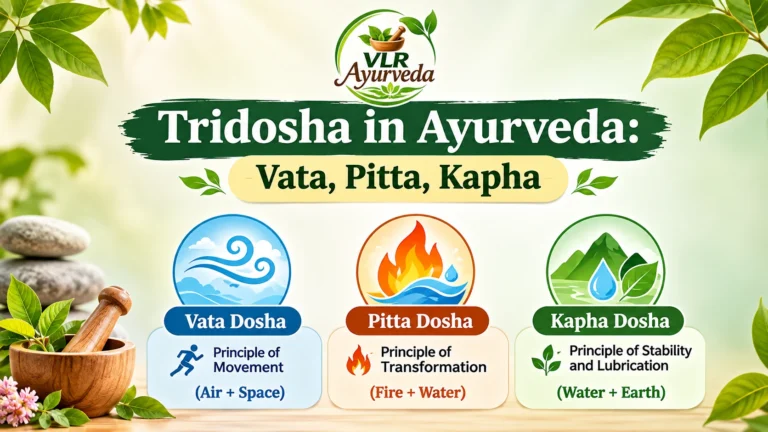
Dosha refers to the three fundamental regulatory principles described in Ayurveda.
The three Doshas are:
- Vata Dosha
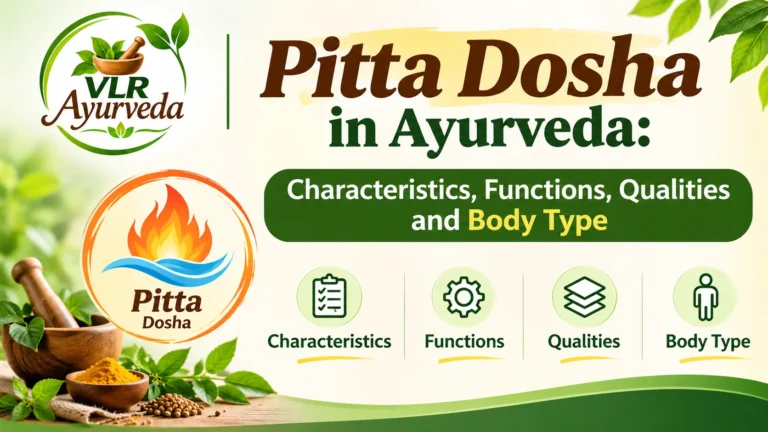
- Pitta Dosha
- Kapha Dosha
According to Ayurvedic principles, these Doshas regulate different physiological functions of the body.
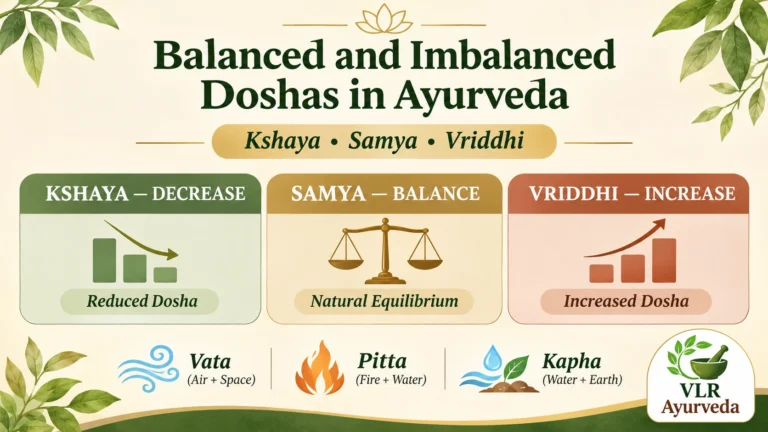
A balanced state of Doshas is considered important for maintaining health.
4.2 Sama Agni – Balanced Digestive Fire
Agni literally means fire.
In Ayurveda, Agni represents the principles responsible for digestion and transformation of food and nutrients.
Sama Agni refers to balanced digestive functioning.
Proper digestive functioning is traditionally considered important for:
- Digestion of food.
- Processing of nutrients.
- Metabolic activities.
- Maintaining nutritional balance.
- Supporting overall health.
When Agni becomes imbalanced according to Ayurvedic principles, it may contribute to digestive disturbances.
4.3 Sama Dhatu – Balanced Body Tissues
Dhatu refers to the fundamental tissues or structural components of the body in Ayurveda.
According to classical Ayurveda, there are seven primary Dhatus.
| Dhatu | Meaning |
|---|---|
| Rasa | Plasma or nutritive fluid |
| Rakta | Blood tissue |
| Mamsa | Muscle tissue |
| Meda | Adipose or fat tissue |
| Asthi | Bone tissue |
| Majja | Marrow tissue |
| Shukra | Reproductive tissue |
Sama Dhatu refers to the proper nourishment and functioning of these seven Dhatus.
The balance of Dhatus is traditionally considered essential for maintaining body structure, strength, and normal physiological functions.
4.4 Sama Mala Kriya – Proper Waste Elimination
Mala refers to the waste products produced by the body.
Ayurveda identifies three major types of Malas:
| Mala | Meaning | Function |
|---|---|---|
| Purisha | Faeces | Elimination of digestive waste |
| Mutra | Urine | Elimination of urinary waste |
| Sweda | Sweat | Elimination through perspiration |
Sama Mala Kriya means proper elimination and functioning of these waste products.
Regular bowel movements, normal urination, and appropriate sweating are considered important aspects of bodily functioning in the traditional Ayurvedic framework.
4.5 Prasanna Atma – Peaceful Inner Self
Prasanna means happy, cheerful, clear, or contented.
Atma refers to the inner self or soul in Ayurvedic philosophy.
Prasanna Atma indicates a peaceful and contented inner state.
It emphasizes the importance of inner well-being and spiritual balance.
4.6 Prasanna Indriya – Healthy Sense Organs
Indriya refers to the sense organs.
The five primary sensory faculties are associated with:
- Hearing.
- Touch.
- Vision.
- Taste.
- Smell.
Prasanna Indriya refers to the proper functioning and healthy state of the senses.
4.7 Prasanna Manah – Peaceful Mind
Manah means mind.
Prasanna Manah refers to a peaceful, cheerful, and balanced mental state.
It emphasizes:
- Mental clarity.
- Emotional stability.
- Positive thinking.
- Peace of mind.
- Balanced responses to situations.
4.8 Summary of Ayurvedic Health Principles
| Sanskrit Term | Meaning | Importance |
|---|---|---|
| Sama Dosha | Balanced Doshas | Physiological balance |
| Sama Agni | Balanced digestive fire | Proper digestion and transformation |
| Sama Dhatu | Balanced tissues | Tissue nourishment and functioning |
| Sama Mala Kriya | Proper waste elimination | Normal excretory functions |
| Prasanna Atma | Peaceful inner self | Inner well-being |
| Prasanna Indriya | Healthy senses | Proper sensory functioning |
| Prasanna Manah | Peaceful mind | Mental well-being |
Important: According to Ayurveda, all these factors together contribute to the traditional concept of a healthy person, known as Swastha. siva.sh+1
5. Main Objectives of Ayurveda
Ayurveda has two primary objectives.
These objectives are described in Charaka Samhita, Sutrasthana, Chapter 30, Verse 26.
Sanskrit Shloka:
प्रयोजनं चास्य स्वस्थस्य स्वास्थ्यरक्षणमातुरस्य विकारप्रशमनं च॥
The two objectives are:
- Swasthasya Swasthya Rakshanam.
- Aturasya Vikara Prashamanam.
5.1 Swasthasya Swasthya Rakshanam
Meaning: Maintaining and protecting the health of a healthy person.
This is the preventive aspect of Ayurveda.
The focus is on maintaining health and preventing diseases before they develop.
Ayurveda encourages individuals to follow appropriate lifestyle and dietary practices according to their constitution.
Important approaches include:
- Following a suitable daily routine (Dinacharya).
- Following seasonal routines (Ritucharya).
- Eating appropriate food.
- Maintaining digestive health.
- Getting sufficient rest and sleep.
- Practising suitable physical activities.
- Maintaining mental well-being.
- Avoiding unhealthy habits.
Example:
A healthy person who follows a regular sleep schedule, eats balanced meals, maintains physical activity, and follows appropriate lifestyle practices is applying the preventive principles of Ayurveda.
5.2 Aturasya Vikara Prashamanam
Meaning: Managing and alleviating diseases or disorders in an individual who is already ill.
This is the curative or therapeutic aspect of Ayurveda.
Here, the primary objective is to understand the patient’s condition and provide appropriate treatment.
Traditional Ayurvedic treatment approaches may involve:
- Understanding the patient’s Prakriti.
- Assessing Dosha imbalance.
- Evaluating Agni.
- Understanding the condition of Dhatus.
- Identifying relevant symptoms.
- Dietary modifications.
- Lifestyle modifications.
- Appropriate Ayurvedic medicines.
- Panchakarma procedures when clinically indicated.
Example:
When an individual experiences digestive discomfort, an Ayurvedic practitioner may assess the person’s symptoms, dietary practices, lifestyle, and constitution before recommending an appropriate management approach.
Treatment must be individualized and should not be assumed to guarantee complete disease eradication.
5.3 Difference Between the Two Objectives
| Swasthasya Swasthya Rakshanam | Aturasya Vikara Prashamanam |
|---|---|
| Protecting the health of healthy people | Managing the diseases of sick people |
| Focuses on prevention | Focuses on treatment |
| Helps maintain health | Helps manage illness |
| Includes diet and lifestyle practices | Includes appropriate therapeutic interventions |
| Preventive healthcare | Curative healthcare |
The central idea is that Ayurveda gives importance to both the maintenance of health and the management of diseases. siva.sh+1
6. How Ayurveda Helps Maintain Health
Ayurveda emphasizes understanding an individual’s body constitution and following appropriate food and lifestyle practices.
It considers three important approaches for maintaining health.
6.1 Proper Diet According to Prakriti
Prakriti refers to an individual’s natural body constitution.
According to Ayurveda, every individual has a unique constitutional combination of the three Doshas:
- Vata.
- Pitta.
- Kapha.
Based on the predominant Dosha and individual characteristics, dietary recommendations may differ.
Food selection in Ayurveda considers factors such as:
- Taste (Rasa).
- Properties (Guna).
- Potency (Virya).
- Digestive transformation (Vipaka).
- Individual digestive capacity.
- Season and environmental conditions.
- Individual constitution.
Example:
Two individuals may consume the same food, but their digestive responses and suitability may differ according to their individual constitution and other health factors.
Therefore, Ayurveda emphasizes individualized dietary practices instead of assuming that one diet is suitable for everyone.
6.2 Following Dinacharya – Daily Routine
Dinacharya means daily routine.
It includes regular practices that support health and daily discipline.
Examples of traditional Dinacharya practices include:
- Waking up at an appropriate time.
- Maintaining personal hygiene.
- Oral care.
- Physical exercise according to individual capacity.
- Following suitable dietary practices.
- Maintaining regular meal timings.
- Getting sufficient sleep.
- Keeping the mind relaxed.
Following a consistent daily routine is traditionally considered beneficial for maintaining physiological balance.
6.3 Use of Ayurvedic Herbs and Formulations
Ayurveda uses medicinal plants, herbs, and traditional formulations as part of its therapeutic approach.
Herbs and formulations are selected according to several considerations, including:
- Individual Prakriti.
- Dosha predominance.
- Nature of the disease.
- Digestive capacity.
- Age and general health.
- Suitable dosage and treatment duration.
Different herbs have different traditional properties and uses.
However, herbal products are not automatically safe simply because they are natural. Their quality, dosage, contraindications, and possible interactions with other medicines must be considered.
Medicinal herbs and formulations should be used under qualified professional guidance.
7. Importance of Understanding Individual Body Constitution
One of the important foundations of Ayurveda is understanding individual body constitution, known as Prakriti.
Prakriti is used to describe an individual’s natural constitutional characteristics.
Understanding Prakriti helps practitioners develop individualized approaches to:
- Food selection.
- Daily activities.
- Seasonal practices.
- Sleep and rest.
- Physical activities.
- Lifestyle modifications.
- Traditional therapeutic recommendations.
For example, an individual with a particular Dosha predominance may receive different dietary and lifestyle recommendations from someone with a different constitution.
This is one of the distinctive features of the traditional Ayurvedic approach to personalized health management.
The concept of personalized Prakriti-based recommendations should not be confused with a medically validated diagnostic test for determining disease.
8. Is Ayurveda Only for Ayurvedic Doctors?
Ayurveda is a traditional science of life that includes knowledge about everyday living.
Many basic concepts of Ayurveda can be understood by ordinary individuals, even without formal medical education.
For example, people can learn about:
- Basic dietary awareness.
- The importance of regular routines.
- Appropriate sleep habits.
- Personal hygiene.
- Healthy physical activity.
- Seasonal lifestyle practices.
- Mental relaxation.
These basic concepts can help individuals become more aware of their lifestyle choices.
However, there is an important difference between learning Ayurveda and practising medical treatment.
Medical diagnosis, prescribing medicinal formulations, and performing Panchakarma or other therapeutic procedures require appropriate professional qualifications and supervision.
People should not independently diagnose diseases or start potentially potent Ayurvedic medicines based on online information.
The World Health Organization emphasizes appropriate professional competence, product quality, and patient safety in Ayurveda practice. World Health Organization+1
9. Three Major Classical Texts of Ayurveda
Ayurveda has several important classical texts that document its theories, principles, medicines, treatment methods, surgical practices, and lifestyle recommendations.
Three widely studied classical works are:
- Charaka Samhita.
- Sushruta Samhita.
- Ashtanga Hridaya.
These texts are important foundations for the study of Ayurvedic knowledge.
9.1 Charaka Samhita
Charaka Samhita: Complete Guide to All 8 Sthanas & 120 Chapters – Ayurveda Hub
Author / Redactor: Acharya Charaka.
The Charaka Samhita is one of the most important classical texts of Ayurveda.
Its original textual foundation is associated with Agnivesha Tantra, which was redacted by Charaka and further transmitted through later scholarly contributions.
The book mainly focuses on Kayachikitsa, meaning internal medicine.
Important topics covered in Charaka Samhita include:
- Fundamental principles of Ayurveda.
- Definition and objectives of Ayurveda.
- Doshas and Dhatus.
- Agni and digestive functions.
- Disease causes and symptoms.
- Diagnosis and treatment principles.
- Dietary practices.
- Daily and seasonal routines.
- Medicinal herbs and formulations.
- Preventive healthcare.
The Charaka Samhita provides a comprehensive foundation for understanding the theoretical and clinical principles of Ayurvedic medicine.
9.2 Sushruta Samhita
Author: Acharya Sushruta.
The Sushruta Samhita is one of the most important texts associated with surgery in Ayurveda.
Sushruta is traditionally recognized as the Father of Surgery because of his contributions to the development and documentation of surgical knowledge.
The book primarily focuses on Shalya Tantra, which refers to the Ayurvedic branch of surgery.
Important topics covered in Sushruta Samhita include:
- Surgical principles.
- Anatomy.
- Surgical instruments.
- Wound management.
- Surgical procedures.
- Fracture management.
- Management of foreign bodies.
- Treatment of certain anorectal conditions.
- Eye and other specialized surgical procedures.
- Post-operative care.
Sushruta Samhita also documents detailed information about surgical techniques and medical practices.
The text represents an important part of the historical development of Indian surgical knowledge.
9.3 Ashtanga Hridaya
Ashtanga Hridaya |Birth of Ayurveda | First Medical Literature | Kerala Ayurveda
Author: Acharya Vagbhata.
Ashtanga Hridaya is another important classical text of Ayurveda.
It presents Ayurvedic principles in a systematic and comparatively concise format.
It brings together important concepts related to medicine, surgery, preventive healthcare, lifestyle, and treatment approaches.
Important topics covered in Ashtanga Hridaya include:
- Fundamental Ayurvedic concepts.
- Three Doshas.
- Five subtypes of each Dosha.
- Agni and digestive principles.
- Dhatus and Malas.
- Dietary practices.
- Dinacharya.
- Ritucharya.
- Ayurvedic medicines.
- Panchakarma.
- Disease diagnosis and management.
Ashtanga Hridaya is particularly useful for understanding the systematic classification and functions of the Doshas.
Important technical clarification: The five functional subtypes of the Doshas are not exclusive to Ashtanga Hridaya. Their classifications are also described in other classical literature, including Charaka Samhita and Sushruta Samhita. cari.gov.in+3
9.4 Comparison of the Three Classical Texts
| Text | Author | Major Area of Focus |
|---|---|---|
| Charaka Samhita | Charaka | Internal medicine and fundamental principles |
| Sushruta Samhita | Sushruta | Surgery and surgical knowledge |
| Ashtanga Hridaya | Vagbhata | Systematic presentation of major Ayurvedic principles |
Together, these texts cover a broad range of Ayurvedic knowledge, including diet, medicines, preventive healthcare, clinical treatment, and surgery.
10. Five Subtypes of the Three Doshas
Ayurveda classifies each of the three Doshas into five functional subtypes.
These classifications explain the different roles of the Doshas in the body.
| Dosha | Five Subtypes |
|---|---|
| Vata | Prana, Udana, Samana, Vyana, Apana |
| Pitta | Pachaka, Ranjaka, Sadhaka, Alochaka, Bhrajaka |
| Kapha | Avalambaka, Kledaka, Bodhaka, Tarpaka, Shleshaka |
These subtypes describe different functional activities and locations according to traditional Ayurvedic physiology.
Vata Dosha
The five subtypes of Vata are:
- Prana Vata: Associated with respiration, sensory functions, and important regulatory activities.
- Udana Vata: Associated with speech, expression, and upward movements.
- Samana Vata: Associated with digestive processes and the movement of nutrients.
- Vyana Vata: Associated with circulation and movements throughout the body.
- Apana Vata: Associated with elimination and downward movements.
Pitta Dosha
The five subtypes of Pitta are:
- Pachaka Pitta: Associated with digestion.
- Ranjaka Pitta: Associated with the traditional concept of blood and tissue coloration.
- Sadhaka Pitta: Associated with intellect, mental functions, and emotional processing.
- Alochaka Pitta: Associated with vision.
- Bhrajaka Pitta: Associated with skin-related functions and complexion.
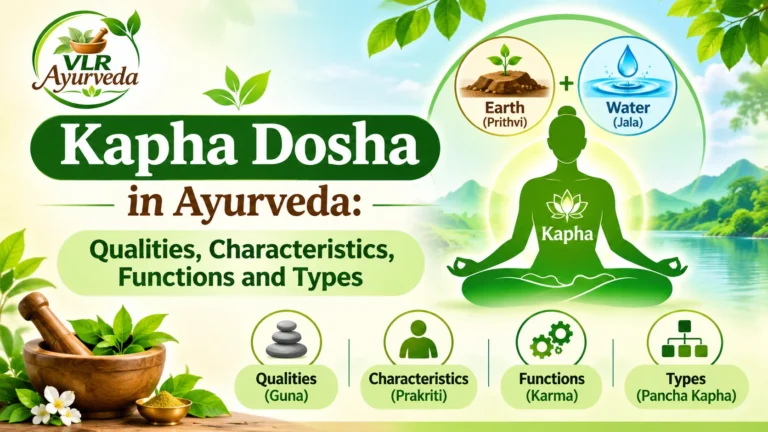
Kapha Dosha
The five subtypes of Kapha are:
- Avalambaka Kapha: Associated with structural support and stability.
- Kledaka Kapha: Associated with moisture and lubrication in the digestive system.
- Bodhaka Kapha: Associated with taste perception.
- Tarpaka Kapha: Associated with nourishment and protection of sensory structures.
- Shleshaka Kapha: Associated with lubrication and stability of joints.
These are traditional Ayurvedic functional descriptions and should not be interpreted as equivalent to individually identifiable anatomical structures in modern medicine. Charak Samhita+1
11. Important Branches of Ayurveda
Ayurveda traditionally describes eight major branches of medical knowledge, collectively known as Ashtanga Ayurveda.
These branches include:
| Branch | Area of Specialization |
|---|---|
| Kayachikitsa | Internal medicine |
| Shalya Tantra | Surgery |
| Shalakya Tantra | Diseases of the eyes, ears, nose, throat, and related structures |
| Kaumarabhritya | Child healthcare and pediatrics |
| Agada Tantra | Toxicology |
| Bhuta Vidya | Traditional approaches to certain mental and behavioural disorders |
| Rasayana Tantra | Rejuvenation and healthy ageing |
| Vajikarana Tantra | Reproductive health and vitality |
These eight branches demonstrate the broad scope of traditional Ayurveda. neiah.ayush.gov.in+1
12. Practical Importance of Ayurveda in Everyday Life
Ayurveda emphasizes the importance of applying health-related principles in everyday living.
Some of its commonly discussed lifestyle areas include:
12.1 Food and Nutrition
Food is an important factor in maintaining health according to Ayurveda.
Dietary practices consider individual constitution, digestion, food properties, and seasonal variations.
12.2 Daily Routine
Following a structured daily routine helps maintain discipline in sleeping, eating, physical activity, and personal hygiene.
12.3 Seasonal Lifestyle
Ayurveda explains that environmental and seasonal changes may influence the body’s functioning.
Ritucharya provides traditional guidelines for adapting food and lifestyle practices to different seasons.
12.4 Physical Activity
Suitable physical activities are considered important for maintaining physical strength and general well-being.
Activities should be appropriate to the individual’s age, physical capacity, and health condition.
12.5 Mental Well-Being
Ayurveda recognizes the relationship between mental state and overall health.
Mental relaxation, appropriate rest, positive habits, and disciplined living are important aspects of its traditional health philosophy.
13. Advantages and Benefits of Learning Ayurveda
Understanding the basic concepts of Ayurveda provides knowledge about traditional approaches to maintaining health.
Important benefits include:
1. Understanding Body Constitution: Helps learners understand the traditional concepts of Prakriti and Dosha predominance.
2. Dietary Awareness: Provides knowledge about food selection and individualized dietary practices.
3. Lifestyle Awareness: Explains the significance of daily and seasonal routines.
4. Preventive Healthcare: Emphasizes the importance of protecting health and adopting healthy habits.
5. Mental Well-Being: Recognizes the role of the mind and senses in overall well-being.
6. Traditional Herbal Knowledge: Introduces medicinal plants and traditional formulations.
7. Understanding Disease Management: Provides knowledge about traditional approaches to identifying and managing health conditions.
8. Holistic Health Perspective: Encourages considering the physical, mental, behavioural, and spiritual dimensions of life.
These benefits describe the traditional educational framework of Ayurveda. They should not be interpreted as proof that every Ayurvedic intervention is effective for every medical condition.
Modern scientific evidence varies by intervention and condition. Traditional approaches should be evaluated for safety and effectiveness, and should not replace necessary medical care. World Health Organization+1
14. Important Points to Remember
The following points summarize the foundational concepts of Ayurveda.
| Topic | Important Information |
|---|---|
| Meaning of Ayurveda | Science of Life |
| Ayur | Life or longevity |
| Veda | Knowledge or science |
| Traditional divine physician | Lord Dhanvantari |
| Vedic association | Atharvaveda |
| Four types of Ayu | Hitayu, Ahitayu, Sukhayu, Dukhayu |
| Three Doshas | Vata, Pitta, Kapha |
| Seven Dhatus | Rasa, Rakta, Mamsa, Meda, Asthi, Majja, Shukra |
| Main waste products | Purisha, Mutra, Sweda |
| Digestive principle | Agni |
| Body constitution | Prakriti |
| Daily routine | Dinacharya |
| Seasonal routine | Ritucharya |
| Health definition | Sushruta Samhita 15.41 |
| First major objective | Swasthasya Swasthya Rakshanam |
| Second major objective | Aturasya Vikara Prashamanam |
| Three important classical texts | Charaka Samhita, Sushruta Samhita, Ashtanga Hridaya |
15. Summary
Ayurveda is an ancient traditional Indian system of medicine that focuses on the science of life, health maintenance, disease prevention, and therapeutic management.
The word Ayurveda comes from two Sanskrit words, Ayur and Veda, meaning the science of life.
Its traditional knowledge includes the classification of life into four categories: Hitayu, Ahitayu, Sukhayu, and Dukhayu.
According to the definition of health in Sushruta Samhita, a healthy person should have balanced Doshas, balanced Agni, properly functioning Dhatus, appropriate Mala Kriya, and a peaceful Atma, Indriya, and Manah.
The two principal objectives of Ayurveda are:
- Swasthasya Swasthya Rakshanam: Protecting and maintaining the health of healthy individuals.
- Aturasya Vikara Prashamanam: Managing diseases and disorders in individuals who are ill.
Ayurveda encourages appropriate dietary practices, Dinacharya, Ritucharya, understanding of Prakriti, and responsible use of traditional medicines.
The three important classical texts—Charaka Samhita, Sushruta Samhita, and Ashtanga Hridaya—provide a comprehensive foundation for understanding traditional Ayurvedic principles and practices.
Understanding these foundational concepts helps learners develop a structured understanding of Ayurveda and its approach to health and wellness.
VLR Ayurveda focuses on building foundational knowledge of Ayurveda, including its traditional principles, lifestyle concepts, and classical literature.
16. Frequently Asked Questions (FAQs)
1. What is Ayurveda?
Ayurveda is an ancient Indian traditional system of medicine. The word Ayurveda means the Science of Life. It focuses on maintaining health, preventing diseases, and managing illnesses through traditional dietary, lifestyle, and therapeutic approaches.
2. What is the literal meaning of Ayurveda?
Ayurveda is derived from two Sanskrit words:
- Ayur means life or longevity.
- Veda means knowledge or science.
Together, they mean the Science of Life.
3. Who is considered the God of Ayurveda?
Lord Dhanvantari is traditionally worshipped as the God of Ayurveda and medicine.
4. What are the four types of Ayu?
The four types of Ayu are:
- Hitayu – Beneficial life.
- Ahitayu – Non-beneficial life.
- Sukhayu – Happy life.
- Dukhayu – Unhappy life.
5. What are the three Doshas in Ayurveda?
The three Doshas are Vata, Pitta, and Kapha. They represent fundamental regulatory principles in traditional Ayurvedic physiology.
6. What is Prakriti in Ayurveda?
Prakriti refers to an individual’s natural body constitution, traditionally understood through the combination and predominance of Vata, Pitta, and Kapha.
7. What is Agni in Ayurveda?
Agni means digestive and metabolic fire. It represents the traditional principles responsible for digestion and transformation within the body.
8. What are the seven Dhatus?
The seven Dhatus are:
- Rasa.
- Rakta.
- Mamsa.
- Meda.
- Asthi.
- Majja.
- Shukra.
9. What are the main objectives of Ayurveda?
The two main objectives are:
- Swasthasya Swasthya Rakshanam – Maintaining the health of healthy people.
- Aturasya Vikara Prashamanam – Managing diseases in sick individuals.
10. What are the three important classical texts of Ayurveda?
The three widely studied texts are:
- Charaka Samhita.
- Sushruta Samhita.
- Ashtanga Hridaya.
11. Which classical Ayurvedic text focuses mainly on surgery?
Sushruta Samhita primarily focuses on surgical knowledge and is associated with Shalya Tantra.
12. Which classical Ayurvedic text focuses mainly on internal medicine?
Charaka Samhita primarily focuses on Kayachikitsa, or internal medicine.
13. What is Dinacharya?
Dinacharya means daily routine. It includes traditional practices related to waking up, personal hygiene, eating, exercise, rest, and sleep.
14. What is Ritucharya?
Ritucharya refers to seasonal lifestyle and dietary practices recommended in Ayurveda to adapt to seasonal changes.
15. Can ordinary people learn Ayurveda?
Yes. Basic Ayurvedic concepts, dietary awareness, daily routines, and traditional lifestyle principles can be learned by anyone. However, medical diagnosis, prescribing medicines, and administering therapeutic procedures require qualified professional supervision.
17. Useful Outbound Links and Additional Learning Resources
The following resources are useful for learning about classical Ayurvedic literature, its traditional principles, and professional practice.
1. e-Samhita – Ayurvedic Classical Texts
Explore Charaka Samhita, Sushruta Samhita, and Ashtanga Hridaya through a digital classical-text resource.Explore Ayurvedic Classical Texts – e-Samhita
2. WHO – Benchmarks for the Practice of Ayurveda
An important resource covering professional practice, safety, quality standards, practitioner requirements, and healthcare considerations.WHO Benchmarks for the Practice of Ayurveda
3. WHO – Traditional Medicine
Learn about traditional medicine, its integration into healthcare systems, evidence-based practices, quality, and patient safety.WHO Traditional Medicine – Questions and Answers
18. Reference URLs
The following references support the classical concepts, definitions, and additional information covered in this article.
1. Charaka Samhita – Introduction and Fundamental Principles:
https://www.vedicsamhita.in/ayurveda/caraka/1/1
2. Charaka Samhita – Definition and Classification of Ayu:
https://www.carakasamhitaonline.com/index.php?title=Life
3. Sushruta Samhita – Definition of Health, Sutrasthana 15.41:
https://www.siva.sh/sushruta-samhita/sutra-sthana/15/41
4. Charaka Samhita – Objectives of Ayurveda, Sutrasthana 30.26:
https://www.siva.sh/caraka-samhita/sutra-sthana/30/26-30
5. Central Ayurveda Research Institute – About Ayurveda and Classical Texts:
https://cari.gov.in/about-ayurveda
6. Government of India – Indian Vedic Heritage and Ayurveda:
https://vedicheritage.gov.in/medicine/
7. Charak Samhita Research, Training and Development Centre – Dosha Concepts:
https://www.carakasamhitaonline.com/index.php?title=Dosha
8. WHO – Benchmarks for the Practice of Ayurveda:
https://www.who.int/publications/b/55766
9. WHO – Traditional Medicine:
https://www.who.int/news-room/questions-and-answers/item/traditional-medicine
Educational note: This article explains traditional Ayurvedic concepts for educational purposes. It is not a substitute for individual medical diagnosis or treatment. Ayurvedic medicines and therapeutic procedures should be used under the supervision of qualified healthcare professionals.