Vata Dosha in Ayurveda: Qualities, Functions & Characteristics
🌿 Vata Dosha in Ayurveda: Meaning, Qualities, Functions, Body Type and Mental Characteristics
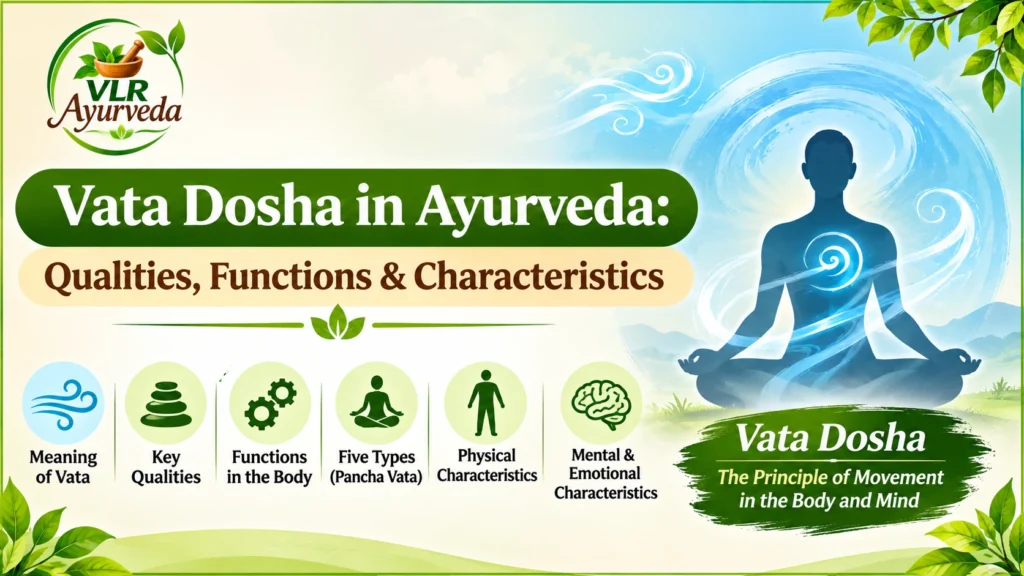
🌱 Introduction to Vata Dosha
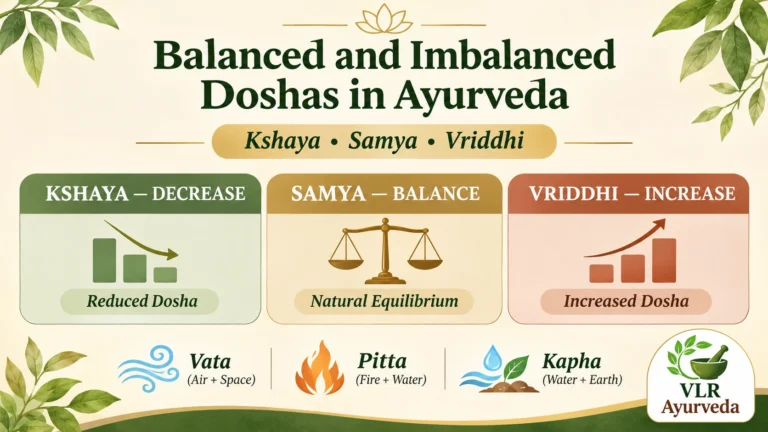
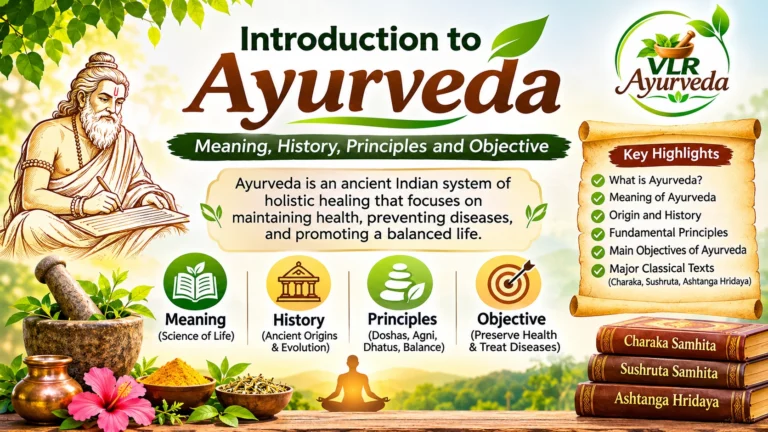
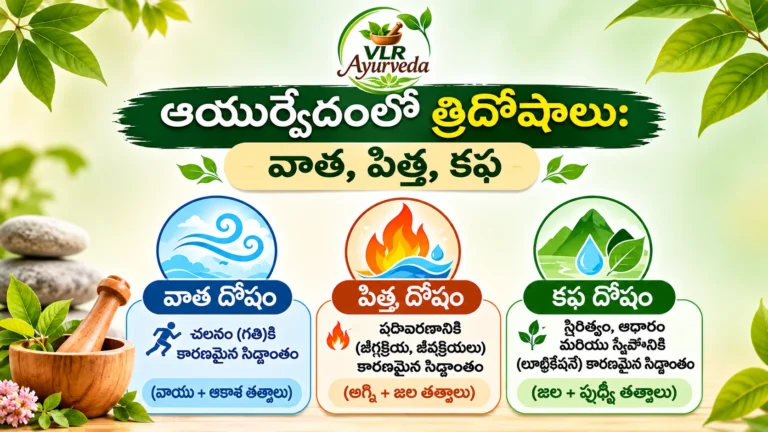
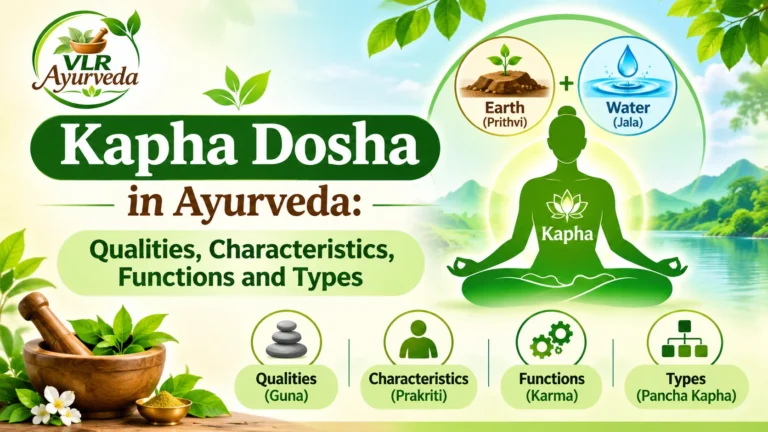
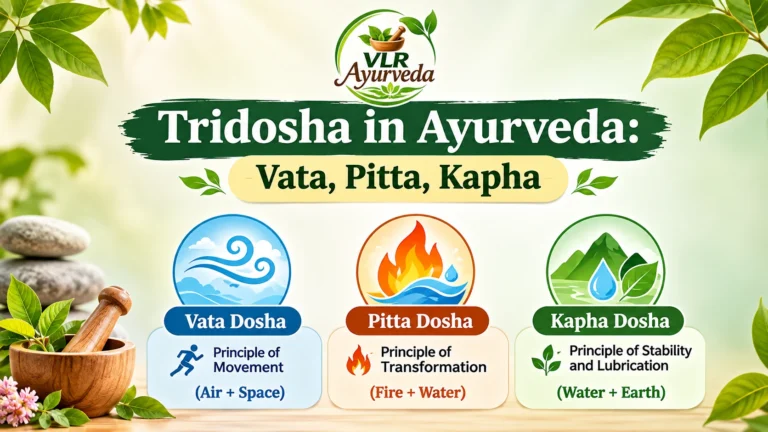
Vata Dosha is one of the three fundamental biological principles in Ayurveda, collectively known as Tridosha. The three Doshas are Vata, Pitta, and Kapha. Each plays an important role in maintaining the body’s physiological functions according to traditional Ayurvedic principles.
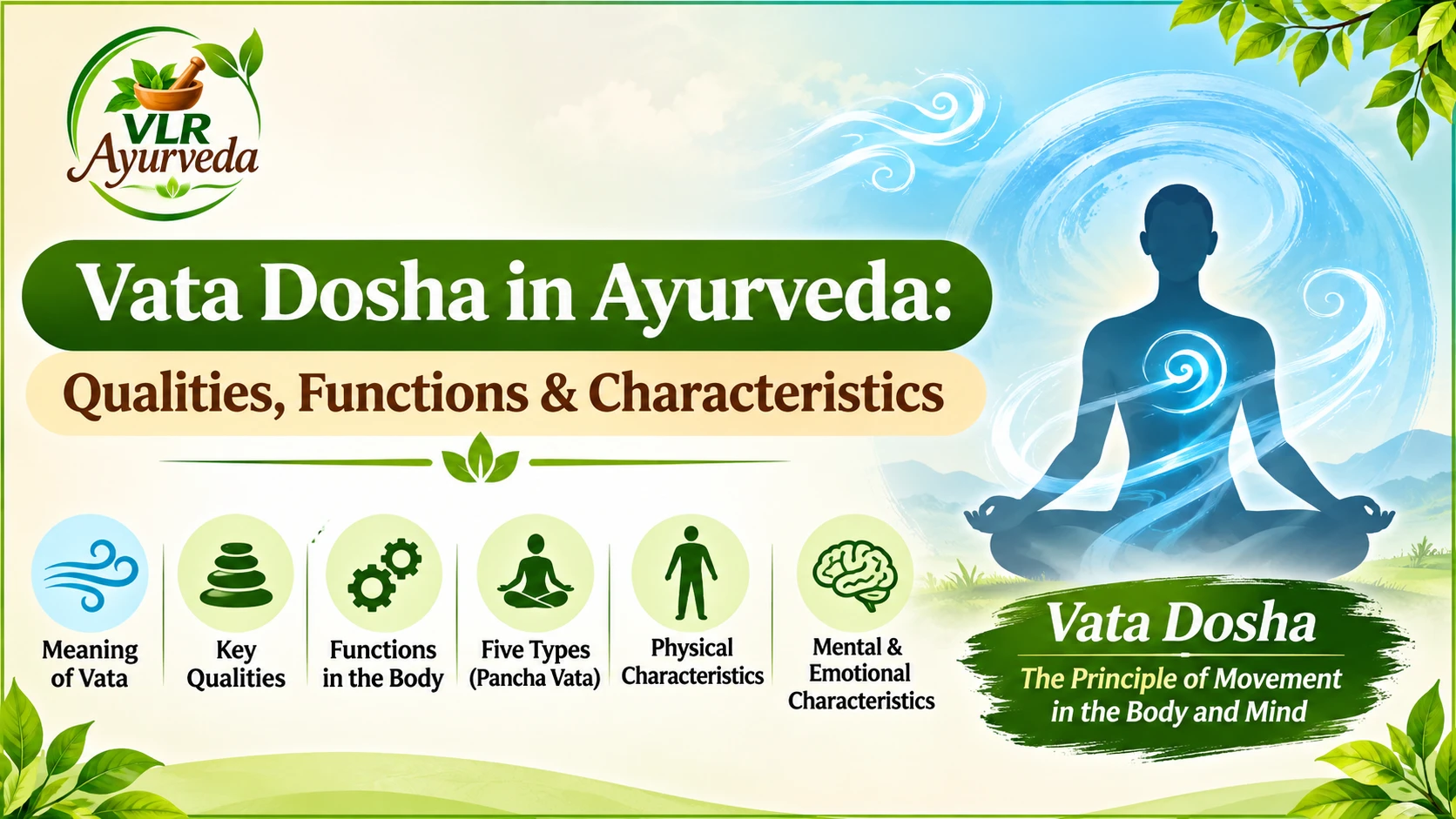
Vata Dosha is primarily associated with movement, communication, circulation, sensory activities, and mental activity. It governs the various movements occurring throughout the body and helps coordinate the functions of other Doshas.
This guide from VLR Ayurveda explores Vata Dosha in detail, including its meaning, characteristics, qualities, functions, physical features, emotional tendencies, and importance in everyday life.
Vata is traditionally considered the principal regulator of movement. It is sometimes called the King of Doshas because Pitta and Kapha depend on its movement-related functions to perform their activities.
Understanding Vata Dosha is an important part of learning Ayurvedic principles and understanding individual body constitution.
📖 1. What Is Vata Dosha?
Vata Dosha is the Ayurvedic principle responsible for movement and communication within the human body.
The word Vata is traditionally associated with wind and movement. Just as wind moves objects in nature, Vata is considered responsible for movements and dynamic activities within the body.
🌬️ Elements Associated with Vata Dosha
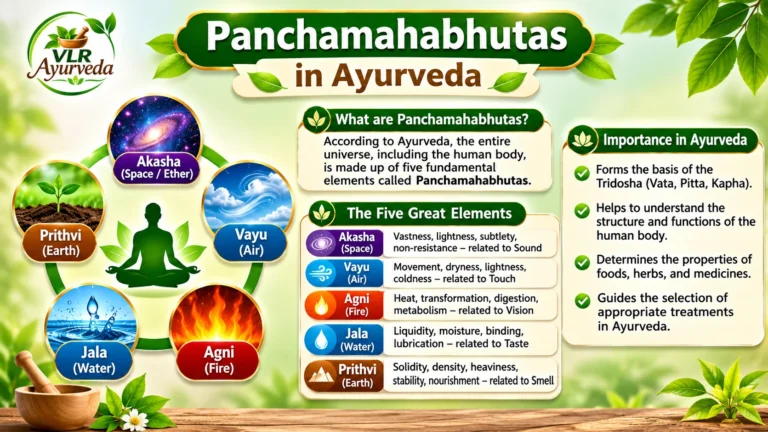
In Ayurveda, Vata is predominantly associated with two of the five fundamental elements:
- 🌬️ Vayu Mahabhuta (Air Element): Represents movement and mobility.
- 🌌 Akasha Mahabhuta (Space Element): Represents space through which movement takes place.
Together, these elements form the traditional foundation of Vata Dosha.
👑 Why Is Vata Called the King of Doshas?
Vata is sometimes described as the King of Doshas because it coordinates movement and helps other Doshas perform their functions.
For example:
- 🔥 Pitta: Associated with digestion and metabolism.
- 💧 Kapha: Associated with structure, stability, and nourishment.
- 🌬️ Vata: Responsible for movement and coordination.
Without movement, the activities associated with the other Doshas cannot proceed in the same way according to Ayurvedic theory.
Therefore, Vata is considered an essential regulatory principle in the human body.
🔗 Further Reading: Ayurvedic description of Vata Dosha in Charaka Samhita Online.
🌬️ 2. Main Qualities of Vata Dosha (Vata Guna)
Ayurveda describes Vata Dosha through specific qualities known as Gunas.
These qualities help explain its characteristics and influence on the body and mind.
📋 Six Principal Qualities of Vata Dosha
| Sanskrit Term | English Meaning | Description |
|---|---|---|
| Ruksha | Dry | Associated with dryness |
| Laghu | Light | Associated with lightness |
| Sheeta | Cold | Associated with coldness |
| Khara | Rough | Associated with roughness |
| Sukshma | Subtle | Associated with subtle characteristics |
| Chala | Mobile | Associated with movement and mobility |
Other descriptions include Vishada (clear or non-slimy) and Sheeghra (quick or swift).
💨 2.1 Ruksha – Dryness
Ruksha means dry or lacking in unctuousness.
Vata is traditionally associated with dryness in various body structures.
Examples:
- Dry skin.
- Dry hair.
- Rough skin texture.
- Dryness in certain body tissues.
⚖️ 2.2 Laghu – Lightness
Laghu means light.
This quality is associated with lightness in the body and quickness in physical and mental activities.
Traditional descriptions of Vata-dominant individuals include a lean body structure and quick movements.
Examples:
- Lean body structure.
- Light physical appearance.
- Quick movements.
- Fast thinking.
❄️ 2.3 Sheeta – Coldness
Sheeta means cold.
Vata is considered cold in nature. Individuals with Vata predominance may traditionally be described as sensitive to cold temperatures.
Examples:
- Frequently feeling cold.
- Cold hands and feet.
- Discomfort in cold weather.
🪵 2.4 Khara – Roughness
Khara means rough or coarse.
This quality is associated with roughness in the skin, hair, nails, and other body structures.
Examples:
- Dry and rough skin.
- Coarse hair texture.
- Roughness associated with certain body structures.
🔬 2.5 Sukshma – Subtle Nature
Sukshma means subtle, minute, or very fine.
This quality represents the ability of Vata to be associated with subtle movements and processes throughout the body.
It is part of the traditional explanation of Vata’s role in sensory and other fine activities.
🔄 2.6 Chala – Mobility
Chala means movement or mobility.
It is one of the most important qualities of Vata Dosha.
Examples:
- Movement of muscles and joints.
- Movement of the body.
- Breathing movements.
- Physical activity.
- Changing thoughts and mental activities.
These qualities collectively explain why Vata is considered the principle of movement in Ayurveda.
⚙️ 3. Functions of Vata Dosha
Vata Dosha is traditionally responsible for coordinating different activities throughout the body.
It is associated with both physical movements and mental processes.
🚶 3.1 Body Movements
Every physical movement is associated with Vata in the Ayurvedic framework.
Examples include:
- Walking.
- Running.
- Sitting and standing.
- Moving the hands and legs.
- Movement of muscles and joints.
- Movement of different tissues.
🫁 3.2 Breathing
Vata is associated with inhalation and exhalation.
The natural movement of breathing is traditionally explained through the functions of Vata Dosha.
❤️ 3.3 Blood Circulation
The movement of blood throughout the body is traditionally associated with Vata, particularly its subtype Vyana Vata.
💓 3.4 Heart Activity
The heartbeat and pulsation are also discussed in relation to Vata’s movement-related functions.
This is an Ayurvedic conceptual explanation, not a replacement for the modern physiological understanding of the heart.
👁️ 3.5 Blinking of Eyes
The opening and closing of eyelids is another example of movement traditionally associated with Vata Dosha.
💪 3.6 Joint and Muscle Movements
Vata supports the traditional explanation of movement involving:
- Muscles.
- Bones and joints.
- Limbs.
- Body tissues.
🧠 3.7 Sensory and Motor Activities
Vata is associated with the functioning and coordination of sensory and motor activities.
It is traditionally connected with the movement of information through the body’s functional systems.
💭 3.8 Mental Activities and Thoughts
Vata is also associated with mental movement.
The thoughts that arise and pass through the mind are traditionally explained through Vata’s dynamic nature.
It is associated with:
- Thinking.
- Creativity.
- Imagination.
- Learning.
- Mental activity.
- Communication.
Thus, Vata is not limited to physical movement. Its traditional functions also include cognitive and sensory activities.
🧩 4. Five Types of Vata Dosha (Pancha Vata)
Classical Ayurveda further divides Vata Dosha into five functional subdivisions.
These are known as Pancha Vata.
📋 Classification of Five Types of Vata
| Type of Vata | Main Traditional Functions |
|---|---|
| Prana Vata | Respiration, sensory functions, and food intake |
| Udana Vata | Speech, effort, strength, and expression |
| Samana Vata | Digestive processes and coordination around digestion |
| Vyana Vata | Movement throughout the body, circulation, and muscular activity |
| Apana Vata | Elimination of urine and feces, menstruation, childbirth, and related functions |
🫁 4.1 Prana Vata
Prana Vata is traditionally associated with the head, chest, throat, and sensory functions.
Main functions:
- Respiration.
- Sneezing.
- Belching.
- Swallowing and food intake.
- Certain sensory activities.
🗣️ 4.2 Udana Vata
Udana Vata is associated with speech and upward-directed activities.
Main functions:
- Speaking.
- Expressing thoughts.
- Making efforts.
- Supporting strength and expression.
- Learning and memory.
🍽️ 4.3 Samana Vata
Samana Vata is associated with digestive activities.
Main functions:
- Supporting digestion.
- Coordinating activities around digestive processing.
- Helping regulate the digestive process.
🔄 4.4 Vyana Vata
Vyana Vata is associated with movement throughout the body.
Main functions:
- Body movements.
- Muscular contraction and relaxation.
- Circulation.
- Movement of limbs.
- Opening and closing of the eyelids.
⬇️ 4.5 Apana Vata
Apana Vata is associated with downward-moving and elimination-related activities.
Main functions:
- Elimination of urine.
- Elimination of feces.
- Menstruation.
- Childbirth.
- Ejaculation.
These five subdivisions explain the different functional roles traditionally assigned to Vata Dosha.
👤 5. Physical Characteristics of Vata-Dominant Individuals
In Ayurveda, the natural constitution of an individual is known as Prakriti.
A person with Vata predominance is traditionally described as having certain physical characteristics associated with the qualities of Vata.
These characteristics may differ from person to person.
🦴 5.1 Lean and Thin Body Structure
Vata-dominant individuals are traditionally described as having:
- Lean body structure.
- Thin physical appearance.
- Relatively low body weight.
- Less body mass compared with some other constitutional profiles.
Their bodies are often described as light in structure.
👀 5.2 Small Eyes and Fine Hair
Traditional descriptions may include relatively small eyes and fine or fuzzy hair.
Hair may also be described as dry or rough.
These features are not definitive indicators of an individual’s Prakriti.
🧴 5.3 Thin and Dry Skin
Vata’s Ruksha and Khara qualities are traditionally associated with:
- Thin skin.
- Dry skin.
- Rough skin texture.
- Cracking or dryness of the skin.
🧊 5.4 Cold Hands and Feet
Because Vata is traditionally associated with coldness, individuals with Vata predominance may experience cold hands and feet.
They may also feel uncomfortable in cold environments.
🍽️ 5.5 Variable Appetite and Digestion
Vata-dominant individuals are traditionally described as having irregular appetite and digestive patterns.
For example:
- Sometimes they feel very hungry.
- At other times, they may have less appetite.
- Their food intake may be irregular.
- They may eat quickly.
- Their meal timings may change frequently.
Within the Ayurvedic framework, irregular eating habits are considered relevant when understanding digestive disturbances associated with Vata.
However, digestive symptoms can have many causes and should not automatically be attributed to Vata.
⏱️ 5.6 Quick Eating Habits
Fast eating is another characteristic traditionally associated with some Vata-dominant individuals.
Eating quickly and following inconsistent meal timings may contribute to digestive discomfort.
Developing regular eating habits and taking sufficient time to eat are useful general lifestyle practices.
📊 Summary of Physical Characteristics
| Physical Feature | Traditional Vata Description |
|---|---|
| 🦴 Body structure | Lean and thin |
| ⚖️ Body weight | Often relatively low |
| 👀 Eyes | May be described as small |
| 💇 Hair | Fine, dry, or rough |
| 🧴 Skin | Thin, dry, and rough |
| 🧊 Hands and feet | May feel cold |
| 🍽️ Appetite | Variable |
| 🔄 Digestion | May be irregular |
| ⏱️ Eating habits | Often described as quick |
| 🌙 Sleep | Light and easily interrupted |
🧠 6. Emotional and Mental Characteristics of Vata-Dominant Individuals
Vata is associated with movement not only in the physical body but also in the mind.
Therefore, traditional Ayurvedic descriptions include certain mental and emotional tendencies among individuals with Vata predominance.
⚡ 6.1 Active and Energetic Nature
Vata-dominant individuals are traditionally described as active and energetic.
They may enjoy continuous activity and prefer doing different tasks rather than remaining in one place for a long time.
💡 6.2 Imaginative and Creative Thinking
Creativity and imagination are commonly associated with Vata’s dynamic qualities.
Such individuals may:
- Generate new ideas.
- Think creatively.
- Imagine different possibilities.
- Explore innovative approaches.
- Show interest in new experiences.
🔀 6.3 Spontaneous and Changeable Nature
Vata is associated with mobility and change.
Therefore, individuals with Vata predominance may be spontaneous and change their plans or opinions quickly.
Their interests and preferences may also change frequently.
🚀 6.4 Quick in Completing Tasks
Speed is one of the traditional characteristics associated with Vata.
Such individuals may start tasks quickly and complete activities at a fast pace.
However, their attention may sometimes shift to another activity before completing the previous one.
📚 6.5 Quick Learning and Forgetting
Vata-dominant individuals are traditionally described as quick learners.
They may understand new information quickly and grasp concepts easily.
However, their memory retention may be comparatively inconsistent, and they may forget information quickly.
💗 6.6 Sensitivity
Sensitivity is another characteristic associated with Vata predominance.
Individuals may respond strongly to environmental changes, personal experiences, or emotional situations.
✈️ 6.7 Interest in Travelling and Exploring
Vata is associated with movement and mobility.
Therefore, Vata-dominant individuals are traditionally described as enjoying:
- Travelling.
- Exploring new places.
- Meeting new people.
- Experiencing new activities.
- Learning about different environments.
🗣️ 6.8 Fast Speaking and Walking
Quick movement is reflected in their communication and physical activities.
They may:
- Speak quickly.
- Walk quickly.
- Move their hands frequently while talking.
- Change topics quickly during conversations.
🎯 6.9 Difficulty Maintaining Concentration
Because of their active and continuously moving mental nature, some Vata-dominant individuals may find it difficult to concentrate on a single topic for a long period.
Their attention may move from one idea to another.
❄️ 6.10 Intolerance to Cold Weather
Coldness is one of the primary qualities of Vata.
Therefore, individuals with Vata predominance are traditionally described as having difficulty tolerating cold weather.
😠 6.11 Quick Anger and Quick Forgiveness
Some traditional Vata personality descriptions include quickly reacting to situations.
For example:
- They may become irritated by small things.
- They may express anger quickly.
- They may also forgive others quickly.
- Their emotional reactions may change rapidly.
These are traditional tendencies, not fixed personality rules.
😴 6.12 Light and Disturbed Sleep
Vata-dominant individuals are traditionally described as having light or irregular sleep.
They may:
- Sleep for shorter periods.
- Wake up easily.
- Become disturbed by small noises.
- Experience interruptions during sleep.
Persistent sleep disturbances should be assessed professionally rather than attributed only to body constitution.
🌟 6.13 Big Dreams and Ambitious Thinking
Vata is associated with creativity, imagination, and movement.
Individuals with Vata predominance are traditionally described as having ambitious ideas and big dreams.
They may enjoy thinking about future possibilities, exploring opportunities, and achieving significant goals.
📋 Summary of Emotional and Mental Characteristics
| Characteristic | Traditional Description |
|---|---|
| ⚡ Activity | Active and energetic |
| 🎨 Creativity | Imaginative and creative |
| 💭 Thinking | Quick thinking |
| 🔀 Behaviour | Spontaneous and changeable |
| 📚 Learning | Quick understanding |
| 🧠 Memory | May forget quickly |
| 🗣️ Communication | Fast speaking |
| 🚶 Movement | Fast walking |
| ✈️ Travel | Enjoys exploring |
| 🎯 Concentration | May find long concentration difficult |
| 💗 Emotions | Sensitive and reactive |
| 😠 Anger | May become angry quickly and forgive quickly |
| 🌙 Sleep | Light and easily interrupted |
| 🌟 Ambition | Big-picture thinking and ambitious dreams |
🌱 7. Importance of Vata Dosha in Ayurveda
Vata Dosha has an important role in the traditional Ayurvedic understanding of the human body.
Its significance can be understood through the following functions:
- 🚶 Movement: Vata is considered responsible for physical movements throughout the body.
- ⚙️ Coordination: It helps coordinate the activities of other Doshas and body components within Ayurvedic theory.
- 🫁 Breathing: It is associated with inhalation and exhalation.
- ❤️ Circulation: Its Vyana subdivision is traditionally associated with blood circulation and bodily movement.
- 👁️ Sensory Activities: It is associated with the functioning of sensory organs.
- 🧠 Mental Activities: It is connected with thinking, learning, memory, and communication.
- 🍽️ Digestive Functions: It is associated with digestive movement and coordination.
- ⬇️ Elimination: It is associated with the movement and elimination of waste products.
In the VLR Ayurveda learning framework, understanding these functions helps explain why Vata is considered an essential component of Tridosha.
🔄 8. Vata Dosha and Everyday Life
The qualities of Vata can help explain certain traditional observations about daily activities and lifestyle.
🏡 Practical Everyday Examples
- 🍽️ Irregular eating: Variable meal timings are traditionally considered relevant to Vata.
- 🚶 Continuous movement: Frequently changing activities reflects the Chala quality.
- 💭 Quick thinking: Rapidly changing thoughts are associated with Vata’s mobile nature.
- ❄️ Cold sensitivity: Discomfort in cold environments is associated with the Sheeta quality.
- 🧴 Dry skin: Dryness is associated with the Ruksha quality.
- 🌙 Light sleep: Easily disturbed sleep is included in traditional Vata constitution descriptions.
🌞 General Lifestyle Considerations
For everyday well-being, useful general practices include:
- 🍽️ Maintaining regular meal timings.
- 🥗 Eating slowly and mindfully.
- 🌙 Following a consistent sleep schedule.
- 🧘 Avoiding unnecessary irregularities in daily routines.
- 🛏️ Maintaining a comfortable sleeping environment.
- 🌿 Taking appropriate rest between demanding activities.
These are general lifestyle suggestions, not individualized Vata treatments. Specific dietary or therapeutic recommendations should depend on an individual’s health condition and professional assessment.
For learners exploring VLR Ayurveda educational content, understanding the relationship between Dosha qualities and everyday habits provides a useful foundation for studying Ayurvedic lifestyle principles.
⚖️ 9. Ayurvedic Understanding and Modern Scientific Perspective
Vata Dosha is a traditional Ayurvedic concept used to explain movement, communication, physiological coordination, and mental activities.
It should not be directly equated with a specific organ, hormone, nerve, or measurable substance in modern medicine.
For example:
- 🌿 Ayurvedic Vata describes movement and functional coordination.
- 🫁 Modern physiology explains breathing through the respiratory system.
- ❤️ Modern medicine explains blood circulation through the heart and blood vessels.
- 🧠 Nervous system functions are studied through anatomical and physiological mechanisms.
Although some descriptions may appear conceptually related, these frameworks are not interchangeable.
The U.S. National Center for Complementary and Integrative Health (NCCIH) notes that scientific evidence for many Ayurvedic health applications remains limited, and more high-quality research is needed.
🔗 Scientific Reference: NCCIH overview of Ayurvedic Medicine, scientific evidence, and safety.
🛡️ 10. Precautions and Important Considerations
Understanding Vata characteristics is useful for learning Ayurveda, but physical and emotional characteristics alone cannot establish a person’s constitution or diagnose a disease.
⚠️ Important Precautions
- ✅ Do not identify your Prakriti based on a single physical feature.
- ✅ Not every Vata-dominant individual will have all the characteristics described above.
- ✅ Physical appearance and personality can be influenced by several factors.
- ✅ Persistent digestive problems require appropriate medical evaluation.
- ✅ Ongoing sleep difficulties should not be ignored.
- ✅ Cold hands and feet can have causes unrelated to Vata.
- ✅ Consult a qualified Ayurvedic practitioner for individualized Prakriti assessment.
- ✅ Do not discontinue prescribed medicines in favour of Ayurvedic remedies.
- ✅ Use Ayurvedic medicines and preparations only with appropriate professional guidance.
Some Ayurvedic preparations may contain potentially toxic substances such as lead, mercury, or arsenic. Product quality and safety should therefore be considered carefully.
VLR Ayurveda emphasizes responsible learning and the importance of distinguishing traditional concepts from established medical evidence.
⭐ 11. Important Points to Remember
📌 Vata is one of the three fundamental Doshas in Ayurveda.
📌 It is predominantly associated with Vayu (Air) and Akasha (Space).
📌 Vata is traditionally considered the principle of movement.
📌 It is sometimes described as the King of Doshas.
📌 Its six principal qualities are Ruksha, Laghu, Sheeta, Khara, Sukshma, and Chala.
📌 It is associated with breathing, circulation, movement, sensory activities, and mental processes.
📌 The five types of Vata are Prana, Udana, Samana, Vyana, and Apana.
📌 Vata-dominant individuals are traditionally described as lean, active, imaginative, and quick.
📌 Irregular appetite, cold sensitivity, dry skin, and light sleep are included in traditional Vata descriptions.
📌 Prakriti is an individual constitutional concept and cannot be determined using one characteristic alone.
📝 12. Summary
Vata Dosha is an important principle in Ayurveda and is traditionally responsible for movement and coordination throughout the human body.
It is associated with the Air and Space elements and possesses six principal qualities: dryness, lightness, coldness, roughness, subtlety, and mobility.
Vata plays a major role in traditional Ayurvedic explanations of breathing, circulation, muscle and joint movement, sensory activities, communication, digestion, and elimination.
Individuals with Vata predominance are traditionally described as having a lean body structure, dry skin, cold sensitivity, quick movements, creative thinking, active behaviour, variable digestion, and light sleep.
The five subdivisions of Vata—Prana, Udana, Samana, Vyana, and Apana—explain its different functional roles.
VLR Ayurveda encourages readers to understand Vata Dosha as part of the broader Tridosha framework and to approach Ayurvedic health concepts with proper professional guidance and scientific awareness.
❓ 13. Frequently Asked Questions (FAQs)
❓ 1. What is Vata Dosha in Ayurveda?
Vata Dosha is one of the three fundamental Doshas in Ayurveda. It is traditionally associated with movement, breathing, circulation, sensory activities, communication, and mental processes.
❓ 2. Why is Vata Dosha called the King of Doshas?
Vata is sometimes called the King of Doshas because it is considered responsible for movement and helps coordinate the activities of Pitta and Kapha.
❓ 3. What are the five types of Vata Dosha?
The five types are:
- Prana Vata.
- Udana Vata.
- Samana Vata.
- Vyana Vata.
- Apana Vata.
❓ 4. What are the six main qualities of Vata Dosha?
The six principal qualities are:
- Ruksha – Dry.
- Laghu – Light.
- Sheeta – Cold.
- Khara – Rough.
- Sukshma – Subtle.
- Chala – Mobile.
❓ 5. What are the physical characteristics of Vata-dominant individuals?
They are traditionally described as lean and thin, with dry skin, fine or dry hair, cold hands and feet, variable appetite, and light sleep.
❓ 6. What are the mental characteristics of Vata-dominant individuals?
Traditional descriptions include creativity, imagination, quick thinking, spontaneity, sensitivity, quick learning, changeable interests, and ambitious thinking.
❓ 7. Does Vata Dosha control blood circulation?
In the traditional Ayurvedic framework, Vata is associated with movement throughout the body. Vyana Vata is particularly associated with circulation and bodily movement.
❓ 8. Does Vata Dosha affect sleep?
Traditional Ayurvedic descriptions associate Vata predominance with light or easily interrupted sleep. However, sleep disturbances can have several causes and require appropriate evaluation.
❓ 9. Which elements are associated with Vata Dosha?
Vata Dosha is predominantly associated with Vayu Mahabhuta (Air Element) and Akasha Mahabhuta (Space Element).
❓ 10. Can a person’s Prakriti be identified only by appearance?
No. Physical appearance alone is insufficient to establish Prakriti. A complete assessment requires consideration of multiple physical, physiological, and psychological characteristics by a qualified Ayurvedic practitioner.
📚 References and Further Reading
The following references provide additional information about traditional Vata characteristics, Prakriti, and modern scientific perspectives.
📖 1. Charak Samhita Research, Training and Development Centre
Publication: Vata Dosha
URL: https://carakasamhitaonline.com/index.php?title=Vata
📖 2. Charak Samhita Research, Training and Development Centre
Publication: Deha Prakriti – Somatic Constitution
URL: https://www.carakasamhitaonline.com/index.php/Deha_prakriti
🔬 3. National Center for Complementary and Integrative Health (NCCIH), National Institutes of Health
Publication: Ayurvedic Medicine: In Depth
URL: https://www.nccih.nih.gov/health/ayurvedic-medicine-in-depth
⚕️ Educational Disclaimer
This article presents traditional Ayurvedic concepts for educational purposes. It is not a substitute for professional medical advice, diagnosis, or treatment.